Cisco and NVIDIA: Strengthening AI and Security Partnerships

Here’s my take

This announcement is more tangible than the initial collaboration announcement back in February 2024. That announcement felt like an “us too” moment. Now with a mutual agreement to support Cisco’s Silicon One with NVIDIA Spectrum-X networking platform and Cisco is committed to supporting NVIDIAs Spectrum silicon with Cisco’s operating system.

This announcement means that there will be joint engineering to support heterogenous environment’s with performant and a determinant outcome enterprises expect from us. The added value of a heterogenous environment, it limits exposure to external threats which are increasingly on the rise seeking exploits to LLMs, supported by large enterprises like Meta.

Part of Cisco’s AI Security strategy is a software named, “AI Defense “ working to set guardrails and protection for enterprise to use these open source LLMs. The future of AI is supporting open ecosystems and partnerships. 

Cisco is focused on giving customers choice. Cisco’s AI PODs are focused on💡inferencing of AI (getting the model to produce an outcome). As models evolve to multistep reasoning, breaking down a complex request into multiple steps and in many cases showing their work to the user, there is a significant scaling law that requires more compute. Often referred to as test-time compute. Gemini 2.0 Flash, DeepSeekR1, o1-mini are examples of multi step reasoning. More reasoning can equate to more accurate responses and is critical for autonomous agents in AI and physical AI.

This also means there is a need for more proficient connectivity. @Johnathan Ross, CEO of Groq, has similar beliefs about test-time compute becoming 100x the expense of AI training. Although Cisco has a compute training offers, 885A and 845A, there are very few organizations that will invest in training at scale to create their own foundational model, rather they will augment the open source models with their own domain knowledge, transfer learning, and agentic AI.

Take a moment to broaden your view outside of AI and into Security. Not to far off and possibly now, with Microsoft’s release of Majorana we will be in a post quantum era. This era will require a network that can support, adapt, respond and withstand a post quantum era. Since Cisco’s Silicon One will be supported in NVIDIAs Spectrum switch, Cisco has essentially a kernel space for use to protect at the kernal level. Cisco’s acquisition of Isovalant can enable a distributed, highly secure fabric at that kernal level. It will be a requirement to have security so tightly coupled with the network and Cisco is in the best position to support that requirement with the release of N9300 data processing unit switch. 

    Keep exploring and happy engineering!

    Did you find this useful? I’m turning AI complexity into friendly chats & aha moments 💡- Join thousands in receiving valuable AI & ML content by subscribing to the weekly newsletter.

    What do you get for subscribing?

    • I will teach you about AI & ML practically
    • You will gain valuable insight on how to adopt AI
    • You will receive recommended readings and audio references for when you are on the go

    Mike

    Transforming Data: A Beginner’s Guide to Feature Engineering

    Have you ever wondered how machines can understand customer preferences, house prices, or even text messages? The answer lies in feature engineering – one of the most crucial yet often overlooked aspects of machine learning.

    What is Feature Engineering?

    Feature engineering 💡 transforms raw data into meaningful features that help machine learning models better understand patterns and make more accurate predictions. Think of it like translating raw ingredients into a form ready for cooking. Just as a chef needs properly prepared ingredients to make a delicious meal, a machine-learning model needs well-engineered features to make accurate predictions.

    Why is Feature Engineering Important?

    Even the most sophisticated machine learning algorithms can fail if fed poor-quality features. Here’s why feature engineering matters:

    1. Better Model Performance: Well-engineered features can capture important patterns in your data that might otherwise be hidden. For example, instead of using raw dates, creating features like “day of the week” or “is_weekend” might better predict shopping behavior.
    2. Domain Knowledge Integration: Feature engineering allows us to incorporate our understanding of the problem into the model. If we’re predicting house prices, we might create a feature that combines square footage and location, knowing that price per square foot varies by neighborhood.

    Understanding Data Types

    Before diving into feature engineering techniques, let’s understand the two main types of data we typically encounter:

    Quantitative Data

    This is numerical data that you can perform mathematical operations on. For example:

    • Age (25, 30, 45)
    • Temperature (98.6°F, 102.3°F)
    • Sales amount ($100, $250, $500)

    Qualitative Data

    This represents categories or qualities that can’t be measured numerically. For example:

    • Colors (Red, Blue, Green)
    • Education level (High School, Bachelor’s, Master’s)
    • Customer satisfaction (Very Satisfied, Satisfied, Dissatisfied)

    Essential Encoding Techniques for Beginners

    When working with qualitative data, we need to convert it into numbers for our machine-learning models. Here are two fundamental encoding techniques:

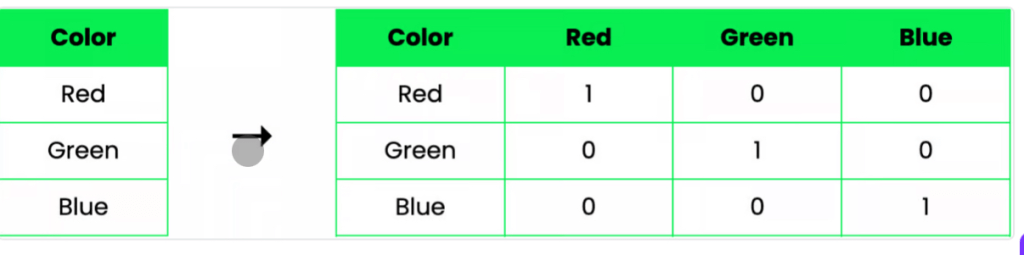
    One-Hot Encoding💡

    Imagine you have a “color” feature with values: Red, Blue, and Green. One-hot encoding creates separate columns for each unique value:

    This is perfect for categorical data where there is no natural order between values. Each category is given equal importance, and the model can treat them independently.

    Ordinal Encoding💡

    When your categories have a natural order (like education levels), ordinal encoding assigns numbers based on that order:

    Education Level    Encoded Value
    High School       1
    Bachelor's        2
    Master's          3
    PhD              4

    This preserves the relative relationship between categories while converting them to a numerical format the model can understand.

    Tips for Beginners

    1. Start Simple: Begin with basic feature engineering techniques and gradually explore more complex ones as you gain confidence.
    2. Understand Your Data: Before applying any encoding technique, understand what your data represents and how different features relate.
    3. Document Your Process: Track how you’ve engineered your features. This will help you replicate your success and troubleshoot issues.
    4. Validate Your Results: Always check if your feature engineering improves model performance. Sometimes simpler is better!

    Remember, feature engineering is both an art and a science. It requires creativity, domain knowledge, and experimentation. As you practice, you’ll develop an intuition for which techniques work best in different situations.

    Keep exploring and happy engineering!

    Did you find this useful? I’m turning AI complexity into friendly chats & aha moments 💡- Join thousands in receiving valuable AI & ML content by subscribing to the weekly newsletter.

    What do you get for subscribing?

    • I will teach you about AI & ML practically
    • You will gain valuable insight on how to adopt AI
    • You will receive recommended readings and audio references for when you are on the go

    Mike
    Sources:

    What Is One Hot Encoding and How to Implement It in Python

    Cisco AI Infrastructure PODs: Configurations for Every Inference Use Case

    I’m Turning AI complexity into friendly chats & aha moments 💡- Join thousands in receiving valuable AI & ML content by subscribing at the end of this post!

    AI Infrastructure PODs play a vital role in addressing the challenges and opportunities presented by the increasing adoption of AI. They offer a comprehensive, scalable, and performance-optimized solution that simplifies AI deployments and empowers organizations to unlock the full potential of AI across various applications and industries.

    Specifically focused on Inferencing, 💡AI inferencing is the process of using a trained artificial intelligence model to make predictions or decisions based on new, unseen data. So after you train a model you need to use the model. That is inferencing.

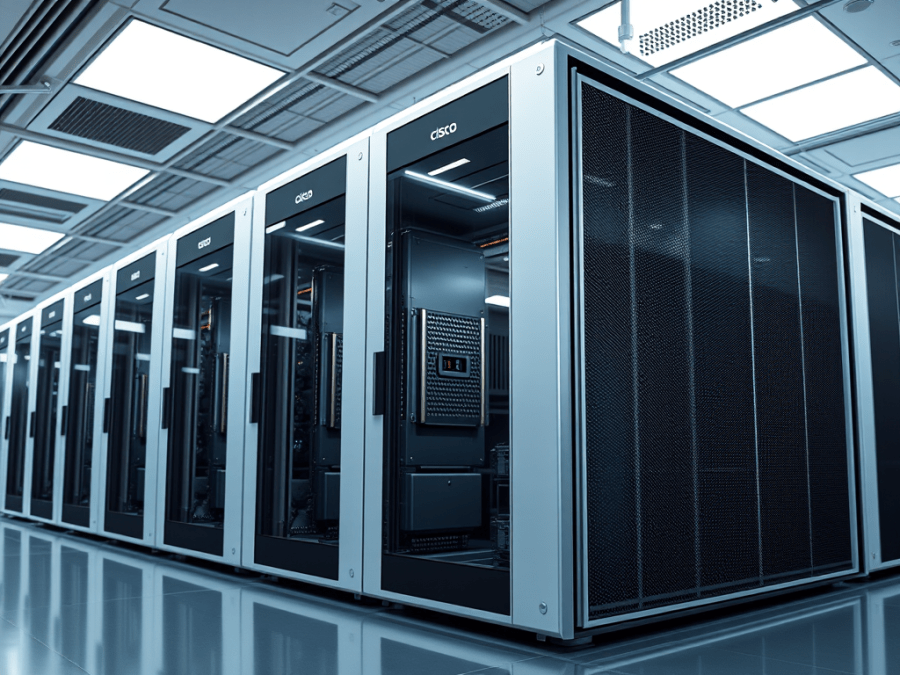
    Cisco’s AI Infrastructure PODs are pre-configured, validated bundles designed for various AI and ML use cases. These PODs offer different CPU, GPU, and memory resource configurations to meet specific workload requirements. Here’s a breakdown of the four configurations and their intended use cases:

    Cisco’s AI Infrastructure POD Configurations and Use Cases (Comparison Graph)
    👇

    Factors Influencing POD Selection

    The choice of POD configuration depends on several factors, including:

    • Model Size and Complexity: Larger, more complex models require more computational resources, typically provided by higher-end GPUs and more memory.
    • Performance Requirements: Applications requiring real-time responsiveness necessitate PODs with optimized performance characteristics, such as low latency and high throughput.
    • Scalability Needs: Organizations anticipating growth in AI workloads should opt for PODs that can scale dynamically by adding or removing resources as needed.
    • Use Case Specificity: Different use cases, such as edge inferencing, 💡Retrieval-Augmented Generation (RAG), which leverages knowledge sources to provide contextual relevance during a query, or large-scale model deployment, have distinct requirements that influence POD selection.

    Cisco’s AI Infrastructure PODs provide a flexible and scalable foundation for diverse AI workloads. By understanding each POD’s specific configurations and intended use cases, organizations can choose the optimal solution to accelerate their AI initiatives and unlock the potential of this transformative technology.

    Did you find this useful? I’m turning AI complexity into friendly chats & aha moments 💡- Join thousands in receiving valuable AI & ML content by subscribing to the weekly newsletter.

    What do you get for subscribing?

    • I will teach you about AI & ML practically
    • You will gain valuable insight on how to adopt AI
    • You will receive recommended readings and audio references for when you are on the go

    Mike
    Sources:
    AI PODs for Inferencing Data Sheet

    Generative AI Inferencing Use Cases with Cisco UCS

    AI PODs for Inferencing At a Glance

    Cisco Identity Services Engine (ISE) version 3.3


    Simplified Operations


    New Split Update: Upgrading Cisco ISE has never been easier. With the new Split Upgrade feature, customers now have complete control over the upgrade process from the UI, allowing them to upgrade specific ISE nodes in parallel, with multiple iterations, at their convenience without experiencing any downtime. Say goodbye to complex and time-consuming upgrades.


    Control Application Restart: Minimize Downtime, Maximize Efficiency. Downtime during certification renewals can be disruptive. Cisco ISE 3.3 introduces Controlled Application Restart, which allows customers to plan the renewals of the ISE administrative certificate, eliminating the need to reboot the entire ISE deployment at once without control. Schedule updates during low network usage periods, ensuring a smoother security update process without impacting operations.


    Navigation improvement: ISE admins use the ISE UI in order to perform their job. ISE 3.3 introduces a new and improved navigation, allowing ISE admin to faster perform their tasks, with fewer clicks and without hiding their screen while navigating throughout ISE pages. Each ISE admin can now save the pages he or she is using most frequently on ISE and reduce the time it takes them to access those pages. 


    IPv6 Support: in addition to the RADIUS, TACACS+, and ISE management over IPv6, customers can now enable additional services over IPv6: the ISE guest portal can now be accessed over IPv6 address and serve guests on the IPv6 network. profiling of IPv6-enabled endpoints and doing posture checks is also available for IPv6-enabled endpoints. 


    Enhanced Platform Security


    TPM Chip: Strengthen Security with the TPM Chip Security is paramount. Cisco ISE 3.3 with SNS-3700 (or virtual machines supporting VTPM) introduces the TPM Chip, a dedicated and secure storage location for sensitive information. With true random number generation for key generation, the TPM Chip enhances the security of stored data, providing you with peace of mind.

    ISE Cipher Control: By allowing ISE admins to disable unwanted and weak ciphers manually, ISE 3.3 helps customers to meet compliance and regulations without the need to wait for the next release or a patch. 


    TLS 1.3 for ISE admins: ISE admins can now connect to ISE UI over TLS 1.3. TLS 1.3 provides enhanced security and improved performance by reducing latency and eliminating outdated cryptographic algorithms, ensuring stronger encryption and more efficient communication between clients and servers. 

    Certificate-Based Authentication for API calls: ISE 3.3 supports Certificate-based authentication for API calls. Certificate-based authentication offers stronger security by eliminating the vulnerabilities associated with traditional username and password authentication methods. It provides robust protection against credential theft, unauthorized access, and phishing attacks, ensuring a higher level of trust and authentication for users accessing sensitive systems or resources.


    Visibility and Compliance


    AI/ML based Profiling: Effortlessly Identify Unknown Endpoints with AI/ML Profiling Unidentified endpoints on the network can be a challenge. Cisco ISE 3.3 employs AI/ML Profiling and multi-factor classification (MFC) to swiftly identify clusters of similar unknown endpoints. This cloud-based ML engine helps customers categorize these devices accurately, making it easier to determine their nature and apply appropriate policies.


    Unlock Valuable Insights with Wi-Fi Edge Analytics 

    Our exclusive Wi-Fi Edge Analytics feature enables customers, who use the Cisco Catalyst 9800 wireless controllers, to exchange data between ISE 3.3 and the controller and get profiling information from Apple, Intel, and Samsung devices, enhancing endpoint profiling. 

    This information includes endpoint-specific attributes such as model, operating system version, and firmware. 


    Multi Factor Classification: ISE 3.3 introduces a new way to profile endpoints on the network. The profile is no longer a descriptive string of the endpoint. Instead of that ISE uses MFC – Multi Factor Classification which breaks the profile into 4 categories: Manufacturer, Device Type, Model and OS. This allows our customers to build more granular policies, based on the different MFCs. 


    Posture for ARM based Windows: for customers who move to computers based on ARM processor, ISE 3.3 can now perform posture checks in order to check compliance status before letting those endpoints access to the network. 


    Cloud Availability 


    ISE 3.3 is going to be available on all the supported platforms: AWS, Azure, and Oracle Cloud. Release dates depend on the different cloud vendors:

    ISE 3.3 on Azure  – Already available

    ISE 3.3 on OCI – Already Available

    ISE 3.3 on AWS – Already Available


    ISE 3.3 Resources:


    ISE 3.3 download page

    ISE 3.3 release notes

    Cisco Live 2023 – Top 6 announcement

    Cisco Networking Cloud
    Overview: With simplification at the core of Cisco’s customer-focused momentum, the new Networking Cloud vision sets out how Cisco plans to deliver a single platform experience for seamlessly managing all networking domains. Customers need to shift to a powerful and intelligent platform that can proactively manage the network, eliminate silos, and reduce human workload. At Cisco Live, Cisco will introduce the steps underway to deliver this capability, driven by more unified and consistent experiences, smarter tools, and a simplified portfolio to achieve more robust customer outcomes. News Release: Cisco Showcases Vision to Simplify Networking and Securely Connect the World

    Cisco Security Cloud
    Overview: Cisco is delivering on its promise of the AI-driven Cisco Security Cloud to simplify cybersecurity and empower people to do their best work from anywhere regardless of the increasingly sophisticated threat landscape. Cisco will announce Cisco Secure Access (a security service edge, SSE, solution) that offers frictionless access across any location, any device, and any application through one platform. Cisco is also previewing the first generative AI capabilities in the Security Cloud, including a generative AI-powered Policy Assistant that enables Security and IT administrators to describe granular security policies and evaluate how to best implement them across different aspects of their security infrastructure, and a SOC Assistant that will support the Security Operations Center (SOC) to detect and respond to threats faster. Cisco is also announcing the Secure Firewall 4200 which provides seamless connected experiences at the office or on the road, alongside Cisco Multicloud Defense, which leads the way to security in any environment. News Release: Cisco Shows Breakthrough Innovation Towards AI-First Security Cloud

    Full Stack Observability Platform & DEM Overview: Cisco will announce the launch of a new Full-Stack Observability (FSO) Platform, a vendor-agnostic solution that harnesses the power of the company’s full portfolio. The Cisco FSO Platform is focused on OpenTelemetry and is anchored on Metrics, Events, Logs, and Traces (MELT), enabling businesses to seamlessly collect and analyze MELT data generated by any source. The Cisco FSO Platform is also designed as a unified, extensible platform, allowing developers to build their own observability solutions, empowering an ecosystem of customers and partners. News Release: Cisco Launches Full Stack Observability Platform

    Cloud Native Application Security
    Overview: Announced today, Cisco’s Cloud Native Application Security solution, Panoptica, will now provide end- to-end lifecycle protection for cloud native application environments, from development to deployment to production. Panoptica will include an integrated and simplified visual dashboard experience with seamless scalability across clusters and multicloud environments. This will allow teams to secure APIs as well serverless, containerized, and Kubernetes environments holistically, with less complexity and more efficiency. News Release: Cisco Accelerates Application Security Strategy with Panoptica

    Generative AI – Security & Collaboration
    Overview: Cisco will announce it is reimagining the way people work with new, powerful generative AI technology. Cisco will harness large language models (LLMs) across its Security and Collaboration portfolios to help organizations drive productivity and simplicity for the workforce.
    News Release: Cisco Unveils Next-Gen Solutions that Empower Security and Productivity with Generative AI

    Sustainability
    Overview: Cisco is unveiling new partnerships within sustainable data centers, and advanced energy monitoring with Webex Control Hub. In addition, Cisco will unveil new messaging that speaks to its own sustainability journey and the desire to accelerate total sustainable transformation.
    Blog: Simplifying How Customers Unleash the Power of Our Platforms

    Mike

    EoL APIC-EM

    This is an amendment to complete the software End-of-life announcement for Application Policy Infrastructure Controller Enterprise Module (APIC-EM) by including end of software maintenance support for all versions of the following APIC-EM applications as of July 31, 2023:

    • IWAN Application
    • Wide Area Bonjour
    • Remote Troubleshooter
    • Network Visibility

    The End-of-life announcement for the APIC-EM Hardware Appliance is here. The recommended upgrade is Cisco Catalyst Center (formerly Cisco DNA Center), which includes Wide Area Bonjour capabilities, as well as advanced assurance, automation, and zero-trust network security. Please see the Catalyst Center Release Notes for compatibility information.

    Mike